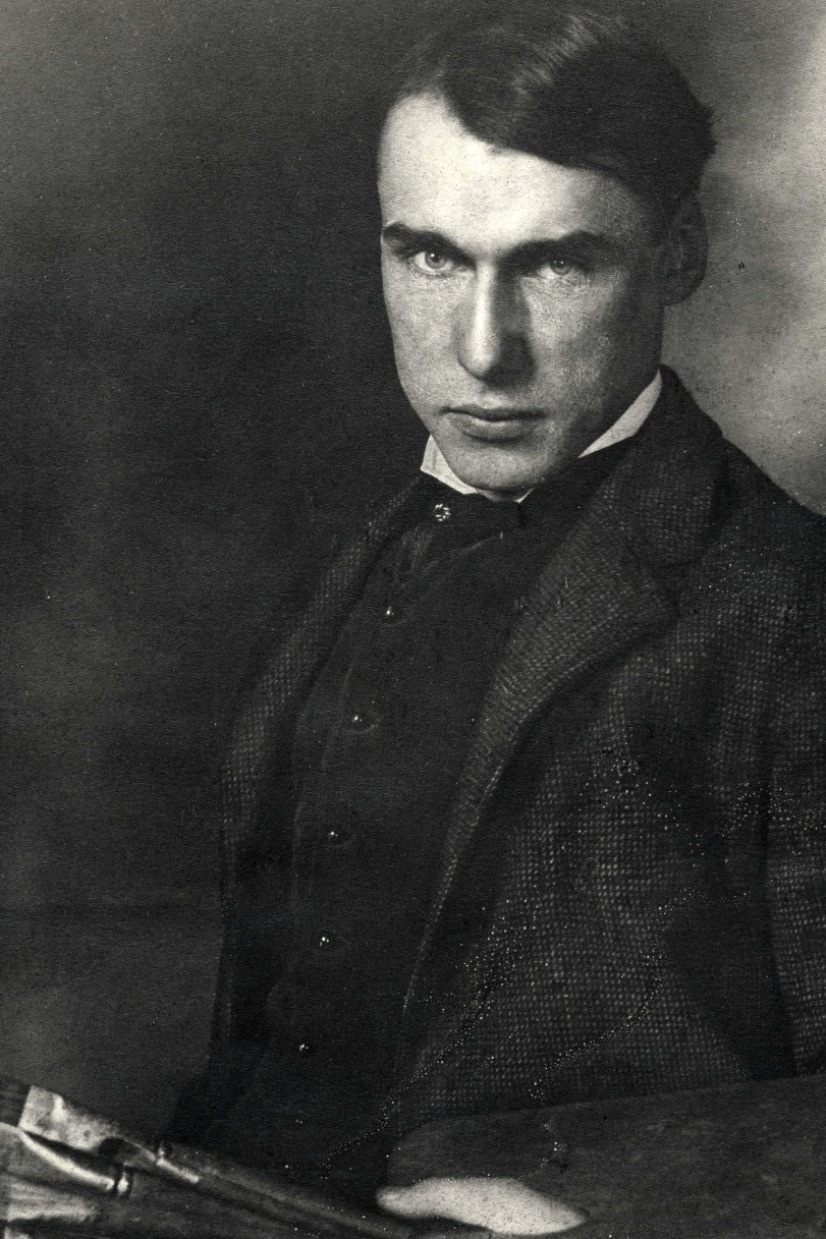
Personal info
Known for
Ultimate Talent
Gender
Male
Birthday
27 October
Location
New York, United States
Edit pageWalt Kuhn
Biography
Walt Kuhn (October 27, 1877 – July 13, 1949) was an American painter, illustrator, cartoonist, and art organizer best known for his expressive portraits of circus performers, clowns, and entertainers. A key figure in the development of modern American art, Kuhn played a pivotal role in organizing the landmark 1913 Armory Show, which introduced European modernism to a broad American audience. His bold paintings and contributions to the American art world established him as one of the leading artists of the early 20th century.
Early Life and Education
Walt Kuhn was born Walter Francis Kuhn on October 27, 1877, in Brooklyn, New York, United States, to German immigrant parents. From an early age, he displayed a talent for drawing and developed an interest in both fine art and illustration.
After graduating from high school, Kuhn worked as a commercial illustrator and cartoonist for magazines and newspapers. Seeking further artistic training, he traveled to Europe, where he studied at the Académie Colarossi in Paris and the Royal Academy of Fine Arts in Munich. His studies exposed him to a variety of European artistic styles that would later influence his work.
Career
Kuhn returned to the United States in the early 1900s and continued working as an illustrator while establishing himself as a painter. His early works reflected influences from Impressionism and Post-Impressionism, but he gradually developed a more personal and expressive style.
One of the most significant moments of his career came in 1913, when he served as one of the principal organizers of the International Exhibition of Modern Art, better known as the Armory Show. The exhibition introduced American audiences to groundbreaking works by artists such as Pablo Picasso, Henri Matisse, Marcel Duchamp, and Paul Cézanne, transforming the course of modern art in the United States.
Following the Armory Show, Kuhn devoted himself primarily to painting. He became especially known for his powerful portraits of circus performers, acrobats, clowns, and vaudeville entertainers. Rather than emphasizing spectacle, his paintings portrayed these figures with dignity, introspection, and emotional depth.
Throughout the 1920s and 1930s, Kuhn exhibited widely across the United States and Europe, earning recognition as one of America's leading modern painters.
Artistic Style
Walt Kuhn's work is characterized by:
- Bold, expressive portraiture.
- Strong, simplified forms.
- Rich, earthy color palettes.
- Psychological depth in his subjects.
- Circus and theatrical themes.
- Modernist influences combined with realism.
His portraits often present performers in quiet moments, revealing their humanity beyond the stage.
Notable Works
Some of Walt Kuhn's best-known paintings include:
- The White Clown
- Clown with Drum
- Acrobat
- The Trapeze Performer
- Girl with Braids
- The Blue Coat
These works are admired for their emotional intensity and distinctive treatment of circus life.
Awards and Recognition
Kuhn's paintings were widely exhibited during his lifetime, and he earned numerous honors for his contributions to American art. His works are now included in the collections of major institutions, including the Smithsonian American Art Museum, the Metropolitan Museum of Art, the Whitney Museum of American Art, the Museum of Modern Art (MoMA), and the Art Institute of Chicago.
He is remembered both as a talented painter and as one of the organizers of the influential Armory Show.
Personal Life
Walt Kuhn married Vera Spier, and the couple had one son, Brenda Putnam Kuhn. He maintained a lifelong fascination with the circus, frequently visiting performances and developing close relationships with many performers who became subjects for his paintings.
In his later years, Kuhn experienced periods of declining health but continued to paint with remarkable dedication.
Death
Walt Kuhn died on July 13, 1949, in New York City at the age of 71.