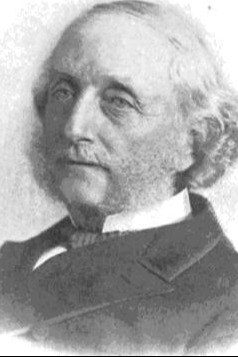
Personal info
Known for
Ultimate Talent
Gender
Male
Birthday
20 April
Location
Massachusetts, United States
Edit pageWilliam Bradford
Biography
William Bradford was a prominent 19th-century American artist and photographer best known for his dramatic depictions of the sea and the frozen landscapes of the Arctic. Combining artistic skill with a spirit of exploration, Bradford helped shape how Americans visualized the remote northern regions during a time of growing interest in science, discovery, and national expansion.
Early Life and Education
William Bradford was born on April 20, 1823, in Fairhaven, Massachusetts, a coastal town deeply connected to maritime trade and whaling. Growing up near the ocean had a lasting influence on his artistic vision. Although he initially pursued a business career, Bradford’s passion for art gradually took precedence.
He received limited formal artistic training, studying briefly under Dutch marine painter Albert Van Beest and later refining his skills through travel and independent study. Bradford was particularly influenced by the traditions of European marine painting, which emphasized realism, atmosphere, and technical precision.
Artistic Career and Style
Bradford began his career as a marine painter, producing detailed and often dramatic scenes of ships, harbors, and stormy seas. His early works reflected the maritime culture of New England, portraying fishing vessels, whaling ships, and coastal life with accuracy and respect for nautical detail.
Over time, Bradford became increasingly fascinated by the Arctic and sub-Arctic regions. He undertook multiple expeditions to Labrador, Greenland, and the Canadian Arctic beginning in the 1860s. These journeys marked a turning point in his career, inspiring some of his most celebrated work.
His paintings of towering icebergs, frozen seas, and luminous polar skies were notable for their scale and realism. Rather than romanticizing the Arctic, Bradford sought to document it with scientific accuracy while still conveying its awe-inspiring beauty and danger. His work appealed to both art audiences and scientific communities.
Role as a Photographer
William Bradford was also a pioneer in the use of photography as a tool for artistic and scientific documentation. During his Arctic expeditions, he brought photographers with him—most notably John L. Dunmore and George Critcherson—to capture images of landscapes, ice formations, ships, and Indigenous peoples.
These photographs were among the earliest visual records of the Arctic regions and played a crucial role in shaping public understanding of the far north. Bradford used the photographs as references for his paintings and as educational material for lectures and publications.
In 1873, he published The Arctic Regions, a lavishly illustrated volume that combined photographs with written observations about Arctic geography, climate, and life. The book was both an artistic and scientific achievement and remains an important historical document.
Public Lectures and Recognition
Bradford was a skilled public speaker and frequently delivered illustrated lectures using lantern slides made from Arctic photographs. These presentations attracted large audiences in the United States and Europe, reflecting widespread fascination with exploration and discovery during the 19th century.
His work was exhibited widely, and he gained recognition as one of America’s leading marine painters. Bradford was associated with the Hudson River School in spirit, though his focus on polar landscapes set him apart from many of his contemporaries.
Personal Life and Later Years
Bradford married twice and had several children, some of whom assisted him in his artistic endeavors. Despite his success, he faced financial difficulties later in life, partly due to the high costs of Arctic expeditions and declining public interest in large-scale marine paintings.
William Bradford died on April 25, 1892, in New York City. Though his fame diminished after his death, modern scholars and museums have renewed interest in his work, recognizing his unique contribution to American art and exploration.