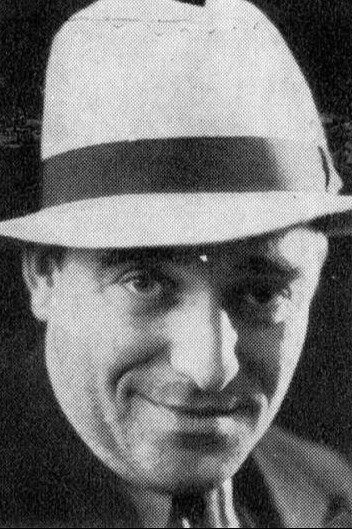
Personal info
Known for
Ultimate Talent
Gender
Male
Birthday
03 December
Location
New York, United States
Edit pageWilliam Gropper
Biography
William Gropper (December 3, 1897 – January 6, 1977) was an American painter, illustrator, cartoonist, muralist, and lithographer known for his powerful social realism and political satire. Throughout a career spanning more than five decades, Gropper used art to address issues such as economic inequality, workers' rights, racial injustice, war, and political corruption. His expressive style and commitment to social commentary made him one of the most influential American artists of the 20th century.
Early Life and Education
William Gropper was born in New York City, United States, to Jewish immigrant parents from Eastern Europe. Growing up on the Lower East Side, he witnessed poverty and the struggles of working-class families, experiences that profoundly shaped his artistic outlook.
He studied at the National Academy of Design and later attended the New York School of Fine and Applied Art, where he trained under noted illustrator George Bridgman. During his early years, Gropper also worked as an assistant to celebrated political cartoonist Art Young, further developing his interest in editorial illustration and satire.
Career
Gropper began his professional career as a newspaper illustrator and political cartoonist. His drawings appeared in influential magazines and newspapers, where he gained recognition for his bold visual style and sharp critiques of social and political issues.
In the 1920s and 1930s, he became associated with the Social Realist movement, producing paintings and prints that depicted workers, farmers, labor protests, and ordinary Americans facing hardship during the Great Depression.
During the New Deal era, Gropper received commissions through federal art programs, creating murals for public buildings that celebrated American workers and democratic ideals.
In addition to painting and mural work, Gropper illustrated numerous books and produced hundreds of lithographs and prints. His art was widely exhibited in the United States and abroad.
During the 1950s, Gropper was called before the House Un-American Activities Committee (HUAC) because of his political associations. Although this affected his public career, he continued to paint and exhibit his work throughout the remainder of his life.
Artistic Style
William Gropper's work is distinguished by:
- Bold, expressive figures.
- Strong social and political themes.
- Elements of satire and caricature.
- Dynamic compositions and energetic brushwork.
- Influences from Social Realism and Expressionism.
- Empathetic portrayals of workers and marginalized communities.
His paintings often combined humor with serious political commentary, making complex social issues accessible to a broad audience.
Notable Works
Some of William Gropper's best-known works include:
- The Senate
- The Circus
- Subway
- Construction of a Dam
- The Flood
- Numerous political cartoons and New Deal-era murals
His lithographs and illustrations remain highly regarded for their artistic quality and historical significance.
Awards and Recognition
Throughout his career, Gropper exhibited his work in major museums and galleries across the United States and internationally. His paintings, prints, and drawings are held in the collections of institutions such as the Smithsonian American Art Museum, the Metropolitan Museum of Art, the Museum of Modern Art (MoMA), and the Whitney Museum of American Art.
Today, he is recognized as one of America's leading Social Realist artists and one of the country's most influential political cartoonists.
Personal Life
William Gropper remained committed to using art as a means of social engagement. He believed that artists should reflect the realities of everyday life and advocate for justice through creative expression. Despite periods of political controversy, he continued producing artwork with the same conviction throughout his life.
Death
William Gropper died on January 6, 1977, in Manhasset, New York, at the age of 79.