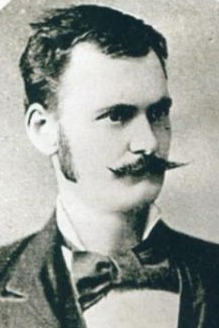
Personal info
Known for
Ultimate Talent
Gender
Male
Birthday
10 August
Location
Cork, Ireland
Edit pageWilliam Harnett
Biography
William Michael Harnett (August 10, 1848 – October 29, 1892) was an Irish-American painter best known for his extraordinary trompe-l'œil ("deceive the eye") still-life paintings. Renowned for his meticulous realism and technical mastery, Harnett created works that convincingly mimicked three-dimensional objects, making him one of the foremost practitioners of illusionistic painting in the United States during the late 19th century.
Early Life and Education
William Harnett was born on August 10, 1848, in Clonakilty, County Cork, Ireland. As a child, he emigrated with his family to Philadelphia, Pennsylvania, where he grew up.
While working as an engraver to support himself, Harnett attended evening classes at the Pennsylvania Academy of the Fine Arts, where he studied drawing and painting. His background in engraving helped him develop the precision and attention to detail that became hallmarks of his artistic style.
Career
Harnett began his career painting decorative works and still lifes before focusing on trompe-l'œil compositions. In the 1870s, he gained recognition for his remarkably realistic paintings of everyday objects, including books, musical instruments, letters, coins, pipes, and hunting equipment.
In 1880, Harnett traveled to Europe, where he studied and worked in cities such as Munich. Exposure to European academic painting and Dutch still-life traditions further refined his technique and expanded his artistic vision.
After returning to the United States, Harnett achieved widespread acclaim. His paintings captivated audiences with their astonishing realism and illusionistic effects, often prompting viewers to reach out and touch the painted objects.
Despite criticism from some art critics who viewed his work as overly literal, collectors enthusiastically embraced his paintings, making him one of the most commercially successful American still-life artists of his time.
Artistic Style
William Harnett's work is characterized by:
- Masterful trompe-l'œil illusionism.
- Highly detailed depictions of everyday objects.
- Rich textures and realistic lighting.
- Careful attention to perspective and composition.
- Muted, harmonious color palettes.
- Themes of music, literature, hunting, and the passage of time.
His paintings often feature objects hanging from wooden doors or displayed on shelves, creating convincing visual illusions that blur the line between reality and art.
Notable Works
Some of William Harnett's most celebrated paintings include:
- After the Hunt (1885)
- The Faithful Colt (1890)
- The Old Violin (1886)
- Job Lot, Cheap (1878)
- Music and Good Luck (1888)
- The Artist's Letter Rack (1879)
These works are regarded as masterpieces of American still-life painting and trompe-l'œil art.
Awards and Recognition
During his lifetime, Harnett exhibited his work in the United States and Europe, earning praise for his exceptional technical skill. Today, his paintings are held in major museum collections, including the Metropolitan Museum of Art, the National Gallery of Art, the Museum of Fine Arts, Boston, and the Pennsylvania Academy of the Fine Arts.
He is widely recognized as one of the greatest American still-life painters and a pioneer of illusionistic art.
Personal Life
Harnett remained devoted to his artistic career despite suffering from chronic rheumatism and other health problems in his later years. He continued painting while traveling between the United States and Europe, producing many of his finest works during this period.
Although much of his personal life remained private, his dedication to craftsmanship and realism earned him lasting respect among fellow artists and collectors.
Death
William Harnett died on October 29, 1892, in New York City, at the age of 44.