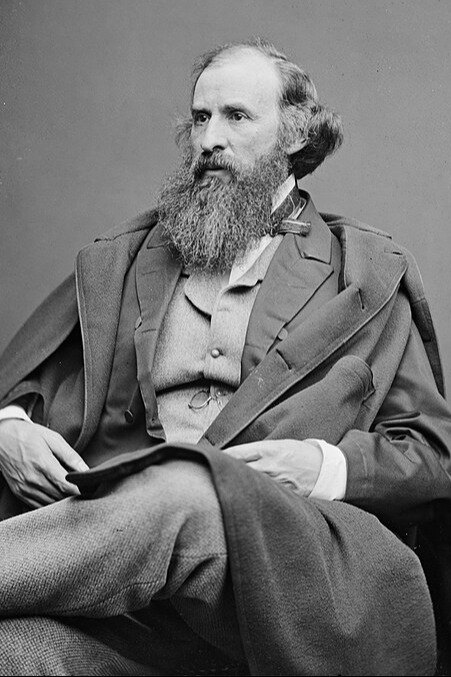
Personal info
Known for
Actor
Gender
Male
Birthday
03 January
Location
New York, United States
Edit pageWilliam Page
Biography
William Page (January 3, 1811 – October 1, 1885) was an American painter, portrait artist, and writer known for his refined portraits, historical paintings, and connections with the Hudson River School. A respected figure in 19th-century American art, Page was admired for his technical skill, classical influences, and thoughtful approach to portraiture. He was also an important supporter of the development of American painting during the period before modernism.
Early Life and Education
William Page was born on January 3, 1811, in Albany, New York, United States. He grew up in New York City, where he developed an early interest in drawing and painting.
Page studied under artist James Herring and later entered the National Academy of Design in New York. He also trained with portrait painter Samuel F. B. Morse, who influenced his early artistic development.
During his youth, Page studied the works of European masters and developed a strong interest in Renaissance painting, especially the works of Raphael, Titian, and other Italian artists.
Career
Page began his professional career as a portrait painter and quickly gained recognition for his ability to capture personality and character. His portraits were admired for their realism, careful composition, and classical beauty.
In the 1840s, Page traveled to Europe, where he spent many years studying and working in Italy. While living in Florence and Rome, he became deeply influenced by Italian Renaissance art and refined his painting techniques.
During this period, he became associated with American artists living abroad, including members of the Hudson River School. His European experiences shaped his interest in idealized beauty, historical subjects, and classical traditions.
After returning to the United States, Page continued creating portraits of prominent figures, including writers, artists, and political leaders. He also painted landscapes and religious subjects.
He served as president of the National Academy of Design from 1871 to 1873 and contributed to the development of American art institutions.
Artistic Style
William Page's work is characterized by:
- Academic realism.
- Classical influences.
- Detailed portraiture.
- Renaissance-inspired compositions.
- Careful study of light and form.
- Historical and religious themes.
- Smooth and refined painting technique.
His portraits emphasized psychological depth and the individuality of his subjects.
Notable Works
Some of William Page’s notable works include:
- The Page Family Portrait
- Portrait of William Cullen Bryant
- Portrait of Henry Wadsworth Longfellow
- Portrait of Abraham Lincoln
- The Madonna and Child
- Historical and mythological paintings
His portrait of Abraham Lincoln is among his best-known works and reflects his ability to portray character and dignity.
Awards and Recognition
Page was a respected member of the American art community and was elected to the National Academy of Design in 1831.
His works were exhibited widely and are held in collections including the Metropolitan Museum of Art, the Smithsonian American Art Museum, and other major institutions.
Personal Life
William Page married and had a family while maintaining a long and productive artistic career. He spent significant periods in Italy, where he was inspired by classical art and culture.
He was also interested in artistic theory and wrote about painting, beauty, and the role of art.
Death
William Page died on October 1, 1885, in Tottenville, Staten Island, New York, at the age of 74.