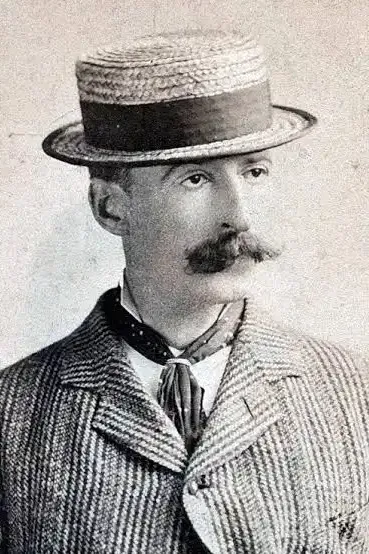
Personal info
Known for
Ultimate Talent
Gender
Male
Birthday
24 February
Location
Massachusetts, United States
Edit pageWinslow Homer
Biography
Winslow Homer (February 24, 1836 – September 29, 1910) was an American painter, watercolorist, and illustrator widely regarded as one of the greatest artists in the history of American art. Best known for his powerful seascapes, landscapes, and scenes of everyday life, Homer captured the beauty and drama of nature with remarkable realism and emotional depth. His work played a pivotal role in the development of American Realism and continues to influence artists around the world.
Early Life and Education
Winslow Homer was born on February 24, 1836, in Boston, Massachusetts, United States. His mother, Henrietta Benson Homer, was an accomplished amateur watercolorist who encouraged his early interest in drawing.
At the age of 19, Homer began an apprenticeship with a commercial lithographer in Boston, where he learned the fundamentals of illustration and printmaking. Although he received little formal academic training, he developed his artistic skills through observation, independent study, and practical experience.
In 1859, Homer moved to New York City and began working as a freelance illustrator for leading publications, establishing himself as one of the country's finest visual journalists.
Career
During the American Civil War, Homer worked as an artist-correspondent, creating illustrations of soldiers and military life for Harper's Weekly. His firsthand observations of the conflict later inspired some of his earliest and most significant oil paintings, depicting the realities of war with honesty and compassion.
Following the war, Homer devoted himself to painting scenes of rural America, children at play, farmers, hunters, and everyday life. His realistic portrayals reflected the changing social landscape of the United States during the late 19th century.
In 1866, Homer traveled to France, where he studied contemporary European painting. Although he admired aspects of French art, he retained a distinctly American approach to realism.
During the 1870s, Homer became one of America's leading watercolorists, producing luminous landscapes and coastal scenes during travels to the Adirondacks, the Caribbean, and England.
A turning point in his career came after his stay in the fishing village of Cullercoats, England (1881–1882). There, he painted dramatic scenes of fishermen and their families, emphasizing courage, resilience, and humanity.
After returning to the United States, Homer settled at Prouts Neck, Maine, where he created many of his greatest masterpieces. His late paintings, featuring stormy seas, crashing waves, and solitary figures confronting the forces of nature, are considered among the finest achievements of American art.
Artistic Style
Winslow Homer's work is characterized by:
- Masterful realism.
- Dramatic seascapes and marine subjects.
- Exceptional watercolor techniques.
- Strong compositions and natural lighting.
- Honest portrayals of ordinary people.
- Themes of survival, independence, and humanity's relationship with nature.
His paintings often emphasize the power and unpredictability of the natural world while portraying human resilience with dignity.
Notable Works
Some of Winslow Homer's most celebrated paintings include:
- Snap the Whip (1872)
- Breezing Up (A Fair Wind) (1876)
- The Gulf Stream (1899)
- The Life Line (1884)
- The Fog Warning (1885)
- Northeaster (1895)
These works are regarded as masterpieces of American painting and are among the most iconic images in the nation's artistic heritage.
Awards and Recognition
During his lifetime, Homer achieved widespread acclaim in both the United States and Europe. Today, his paintings are housed in major museums, including the Metropolitan Museum of Art, the National Gallery of Art, the Museum of Fine Arts, Boston, the Art Institute of Chicago, and numerous other public collections.
He is widely regarded as one of the greatest American painters and one of the most important watercolorists in art history.
Personal Life
Winslow Homer never married and lived a relatively private life. He preferred solitude, especially during his later years in Maine, where the rugged coastline became the principal inspiration for his art.
He remained dedicated to painting throughout his life, continually refining his technique and expanding the expressive possibilities of both oil and watercolor.
Death
Winslow Homer died on September 29, 1910, in Prouts Neck, Maine, at the age of 74.