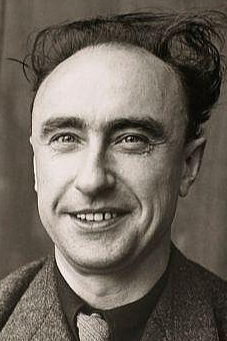
Personal info
Known for
Ultimate Talent
Gender
Male
Birthday
05 January
Location
Paris, France
Edit pageYves Tanguy
Biography
Yves Tanguy (January 5, 1900 – January 15, 1955) was a French-American painter and one of the leading figures of the Surrealist art movement. He was particularly known for his mysterious, dreamlike landscapes filled with unusual organic shapes, imaginary rock formations and strange objects. His distinctive paintings explored the subconscious mind and helped establish a unique visual language within modern Surrealism.
Early Life and Education
Raymond Georges Yves Tanguy was born on January 5, 1900, in Paris, France. His father, Félix Tanguy, was a retired naval officer. Following his father's death in 1908, his mother moved to Brittany, where he spent much of his childhood.
Tanguy received no formal artistic training. In 1918, he joined the merchant navy and travelled to Africa, South America and England. He later completed military service, during which he became friends with French poet Jacques Prévert.
In 1922, he returned to Paris and worked various jobs. His interest in painting developed after seeing the work of Italian artist Giorgio de Chirico in a gallery window in 1923. Inspired by the painting, he decided to become an artist and began teaching himself to paint.
Career
Tanguy became interested in Surrealism after discovering the movement's publications in 1924. The following year, he joined the Surrealist group led by André Breton, who recognised his artistic talent and encouraged his development.
In 1927, he held his first solo exhibition at the Galerie Surréaliste in Paris. His paintings quickly attracted attention for their unusual imaginary landscapes and mysterious compositions. He also participated in important Surrealist exhibitions alongside artists such as Max Ernst, Joan Miró, Jean Arp and André Masson.
During the late 1920s and 1930s, Tanguy developed a distinctive style featuring empty landscapes populated by strange, biomorphic forms. His travels, particularly a journey to Africa in 1930, influenced his interest in geological formations, rocks and unusual natural structures.
In 1939, he met American Surrealist painter Kay Sage in Paris. Later that year, they travelled to the United States and settled there. They married in 1940 and established their home in Woodbury, Connecticut.
During the 1940s, Tanguy became an important member of the American Surrealist community. He participated in the Artists in Exile exhibition in New York in 1942 and continued exhibiting at the Pierre Matisse Gallery. He became a United States citizen in 1948.
Notable Works and Artistic Style
Tanguy was recognised for his highly detailed Surrealist landscapes, featuring mysterious objects, irregular shapes, distant horizons and dreamlike environments. His paintings often combined realistic painting techniques with imaginary forms that appeared to float, grow or emerge from barren landscapes.
Some of his notable works include:
Mama, Papa Is Wounded! (1927)
The Look of Amber (1929)
Promontory Palace (1931)
The Ribbon of Excess (1932)
The Sun in Its Jewel Case (1937)
The Satin Tuning Fork (1940)
Time and Again (1942)
Multiplication of the Arcs (1954)
His artistic approach was closely associated with automatism, a Surrealist technique that encouraged spontaneous creative expression and exploration of the unconscious mind.
Personal Life and Death
Tanguy married American painter Kay Sage in 1940. The couple shared an interest in Surrealism and lived together in Woodbury, Connecticut. Their relationship and artistic partnership remained an important part of his later life.
Yves Tanguy died on January 15, 1955, in Woodbury, Connecticut, at the age of 55. A major retrospective of his work was organised at the Museum of Modern Art in New York later that year.